







Have you ever listened to your favorite rock songs and wondered how guitar players get that warm, crunchy sound? The secret is a small box called an Overdrive Effect Pedal. When you plug your electric guitar into this little device, it takes your clean sound and gently pushes your guitar amplifier. It mimics the sound of a vintage tube amp being pushed to its absolute limit. Instead of making a harsh buzzing noise like heavy metal distortion, an overdrive effect pedal gives you a smooth, singing sustain that feels amazing to play.
Think of it like a singer adding a little bit of grit and power to their voice without shouting. When I first stepped on an overdrive effect pedal during a practice session, the notes suddenly felt alive and jumped right out of the speakers. It adds warmth and character to every single note you pluck. Whether you play sweet blues, classic rock, or indie pop, this stompbox is a guitarist’s best friend. It helps your solos cut through the band mix cleanly while keeping all the natural tone of your instrument intact.
How Does an Overdrive Effect Pedal Actually Work?
Inside every overdrive effect pedal, there is a clever electronic circuit that clips the top and bottom of your guitar signal’s audio wave. This gentle clipping adds warm musical harmonics, which our ears hear as that classic tube-like crunch. Unlike heavy distortion circuits that completely squash the sound wave into a harsh square shape, an overdrive effect pedal keeps the smooth shape of your original wave mostly intact. This means your guitar chords still sound clear and you can hear every individual string ring out nicely.
When you turn up the drive knob on your overdrive effect pedal, you are telling the internal circuit to clip the signal a little bit harder. It is a lot like gently turning up the volume on a small radio until the speaker starts to fuzz just a tiny bit. Guitar players love this because it lets them control the exact amount of grit right at their feet. You can go from a super clean tone to a warm, bluesy roar simply by picking the strings harder or softer. That dynamic control is why the overdrive effect pedal stays turned on all the time for many professional musicians.
The Big Difference Between Overdrive, Distortion, and Fuzz
It is very easy to mix up guitar stompboxes, but an overdrive effect pedal is very different from distortion and fuzz boxes. A fuzz pedal completely chops up your sound wave into a wild, buzzing wall of noise that sounds like a broken speaker. A distortion pedal alters your sound completely no matter how softly or loudly you pluck your strings. But an overdrive effect pedal reacts directly to your playing touch. If you pick softly, it sounds clean and sweet. If you dig your pick in hard, it growls with warmth.
Understanding these differences helps you build a much better guitar rig for your personal style. If you want face-melting, aggressive rock sounds, you might reach for a distortion box. But if you want a creamy, bluesy sustain that responds to your fingers, an overdrive effect pedal is the correct choice. Many famous players actually keep all three types of pedals on their floor to create different moods. Still, the overdrive effect pedal is usually the most versatile tool because it cleans up nicely and fits into almost any musical genre you can imagine.
Exploring the Controls on Your Overdrive Effect Pedal
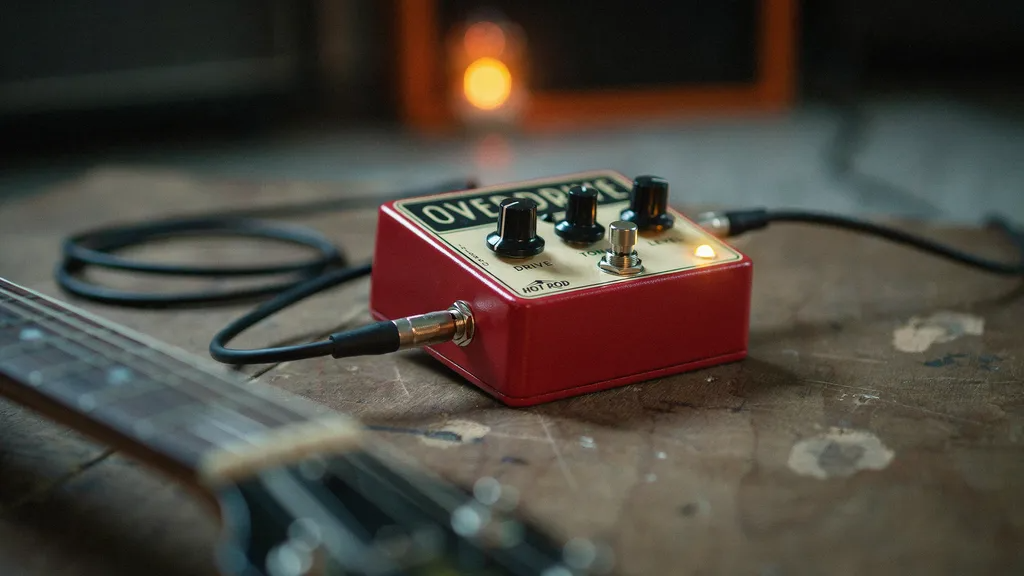
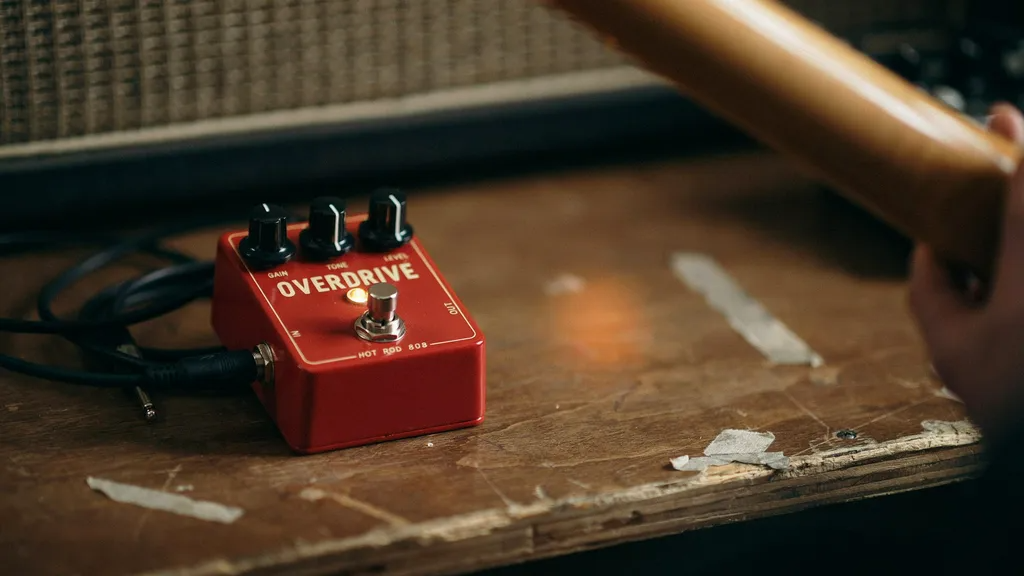
Most guitar stompboxes have three main knobs, and an overdrive effect pedal is usually just as simple to operate. The first knob is typically labeled Drive or Gain, and it controls how much crunch and sustain you want to add. The second knob is Tone, which lets you make your guitar sound brighter and sharper or darker and warmer. The third knob is Level or Volume, and it matches the output of the pedal to your normal guitar volume so things do not get too loud when you step on the switch.
Learning how to set these knobs on your overdrive effect pedal is a fun experiment for any musician. If your guitar sounds too muddy in a live band, you can turn up the tone knob on your overdrive effect pedal to help your notes cut through the room. If your solos feel too weak, turning up the drive knob gives you that extra singing sustain. Taking a few minutes to twist these dials while you play will teach you a lot about how your gear shapes your overall tone and musical expression.
Finding the Best Placement for Your Overdrive Effect Pedal
Where you put your stompboxes in your signal chain matters a whole lot, especially with an overdrive effect pedal. Most guitar players like to place their overdrive effect pedal near the beginning of their pedalboard, right after their tuner and compressor pedals. This lets the overdrive shape your raw guitar signal before it hits modulation effects like chorus, delay, or reverb. Putting your overdrive effect pedal early in the chain ensures that your echoes and spatial effects do not get muddy and distorted.
Another popular trick is stacking two different stompboxes together on your board. You can set one overdrive effect pedal with a low gain setting to act as a general boost for your rhythm playing. Then, you can kick on a second overdrive effect pedal with higher gain whenever it is time for a soaring guitar solo. Experimenting with pedal order is half the fun of building a custom guitar rig. Moving your overdrive effect pedal around before or after other dirt boxes can unlock totally unique tones that define your signature sound.
Tube Amplifiers and Your Overdrive Effect Pedal
To truly understand why an overdrive effect pedal sounds so magical, you have to look at traditional tube amplifiers. Old-school tube amps sound best when you turn them up very loud so the glass vacuum tubes start to work extra hard and naturally break up. Unfortunately, real tube amps are extremely loud and will easily wake up your neighbors or get you in trouble. An overdrive effect pedal gives you that exact same cranked tube amplifier tone at a quiet bedroom volume level.
When you connect an overdrive effect pedal to a clean amplifier channel, it fools the amp into thinking it is running much hotter than it actually is. You get all the rich harmonic warmth and musical compression without blowing out your eardrums. I love using an overdrive effect pedal with small practice amplifiers because it instantly gives them a professional, studio-quality warmth. It bridges the gap between quiet home practice and the massive sound of a stadium rock concert, making every practice session much more inspiring.
Famous Guitarists Who Rely on an Overdrive Effect Pedal
Some of the greatest guitar players in history built their entire legendary sound around a single overdrive effect pedal. Icons like Stevie Ray Vaughan and John Mayer used these stompboxes to push their Fender amplifiers into a singing, bluesy overdrive. When you listen to classic recordings, that warm and expressive guitar tone is very often an overdrive effect pedal working its magic behind the scenes. These artists prove that you do not need a mountain of complicated gear to make breathtaking music that moves people.
Reading interviews with famous touring musicians reveals that almost everyone keeps an overdrive effect pedal on their floorboards. Even heavy metal guitarists use an overdrive effect pedal with low gain to tighten up their bass frequencies and make their high-gain amplifier sound punchier. Seeing how versatile this little box is shows why it has remained a staple of guitar gear for decades. Whether you are playing in a tiny garage band or recording in a professional studio, an overdrive effect pedal is a trusted tool for shaping great music.
Comparing Overdrive Pedals to Boost Pedals
People often ask if a clean boost pedal is the exact same thing as an overdrive effect pedal. A clean boost simply makes your guitar signal louder without adding any extra crunch or tone coloring to the audio. On the other hand, an overdrive effect pedal adds both a volume boost and that sweet, clipping harmonic distortion we talked about earlier. If you just want to push your amplifier harder without changing your core tone character, a boost pedal works wonderfully. But if you want grit, warmth, and sustain, you definitely need an overdrive effect pedal.
Many modern guitarists actually use both pedals together on their pedalboard to get the best of both worlds. You can use a clean boost to slam the front end of your overdrive effect pedal, pushing it into an even richer and thicker lead tone. Trying out these different combinations helps you discover new sonic textures that fit your unique playing style. Do not be afraid to mix and match different brands of pedals until you find the exact combination that makes your electric guitar sing with joy.
Tips for Buying Your First Overdrive Effect Pedal
If you are ready to shop for your very first overdrive effect pedal, the music store can feel a little overwhelming with so many choices. Start by looking for classic, budget-friendly models that have stood the test of time rather than expensive boutique versions. Look for a stompbox with sturdy metal housing, clear knobs, and true bypass switching so your clean tone stays pure when the pedal is turned off. Reading online reviews and watching video demos can also help you hear the character of each overdrive effect pedal before you spend your hard-earned money.
Remember that the best overdrive effect pedal is the one that sounds good to your own ears and matches your favorite guitar amplifier. If possible, bring your own guitar to a local music shop and plug it into a few different pedals to test them out. Pay attention to how the pedal reacts when you pick lightly versus when you strum hard. Finding an overdrive effect pedal that feels natural and fun to play will inspire you to pick up your guitar and practice much more often every single week.
Conclusion
Taking good care of your guitar gear ensures that your overdrive effect pedal will last you for many years of happy playing. Always use the correct power supply voltage specified by the manufacturer so you do not accidentally damage the delicate internal circuit board. Keep your pedals stored in a safe gig bag or mounted securely to a pedalboard when you travel to band practice or live gigs. Avoid spilling drinks near your floor gear, as sticky soda or water can easily ruin the mechanical footswitch on your overdrive effect pedal.
If your overdrive effect pedal ever starts making a scratchy scratching noise when you turn the knobs, a little bit of electronic contact cleaner can fix it right up. Simple maintenance like checking your patch cables and keeping your battery compartment clean goes a long way toward reliable gear performance. Treat your overdrive effect pedal with respect, and it will reward you with pristine tone, warm crunch, and endless musical inspiration every single time you step on the switch to rock out.
Frequently Asked Questions
What does an overdrive effect pedal actually do?
An overdrive effect pedal is a small electronic box that adds warm, tube-like crunch and sustain to your electric guitar sound. It makes your notes sing and react dynamically to your finger touch without sounding harsh or buzzy.
Do I need a special amplifier to use an overdrive effect pedal?
No, you do not need a special amplifier at all. An overdrive effect pedal works great with almost any standard electric guitar amplifier, helping clean amplifier channels sound warm, rich, and naturally overdriven.
How is an overdrive pedal different from a distortion pedal?
An overdrive effect pedal responds to how hard you pick your strings, giving you clean sounds when played softly and grit when played hard. Distortion pedals smash your sound wave completely for an aggressive, constant crunch no matter your pick attack.
Where should I place my overdrive pedal on my board?
Most guitar players place their overdrive effect pedal near the beginning of their signal chain, right after their tuner and before modulation effects like chorus and delay for the cleanest overall tone.
Can beginners easily use an overdrive effect pedal?
Yes, absolutely! An overdrive effect pedal usually features just three simple knobs for drive, tone, and volume, making it very easy for beginner guitarists to plug in and start finding great tones right away.
Will an overdrive pedal damage my guitar or amplifier?
No, using an overdrive effect pedal is completely safe for both your guitar and your amplifier as long as you use the correct power adapter or a fresh 9-volt battery to power the unit properly.