









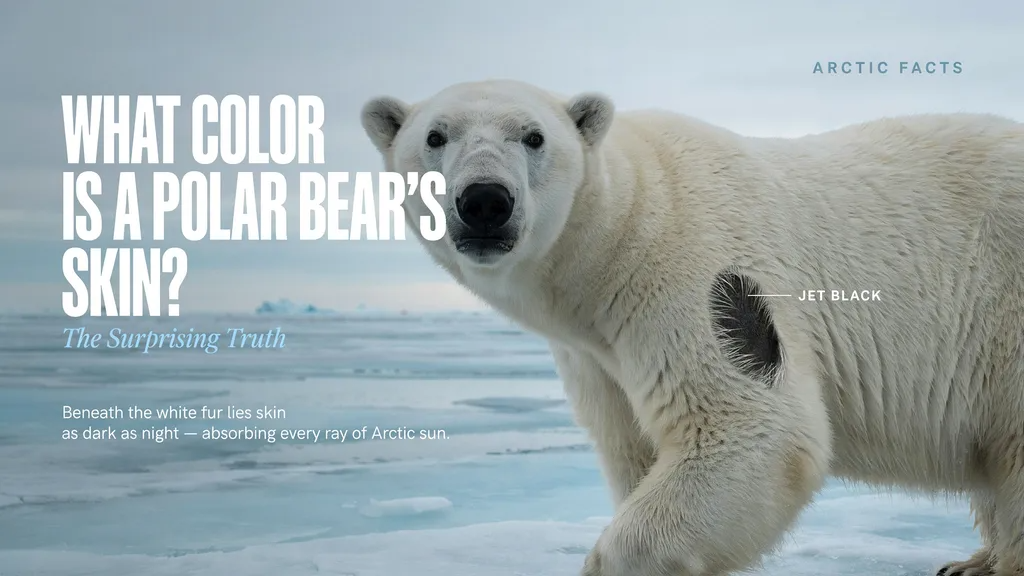
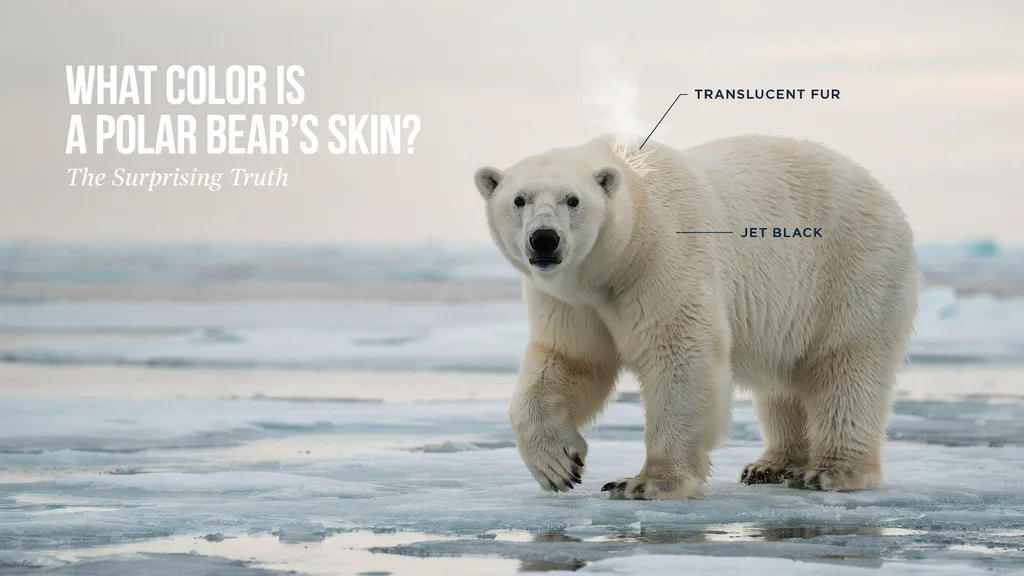
When you picture a polar bear, you probably think of a giant snow-covered ball of fluff. Their fur looks bright white against the icy Arctic landscape. It helps them hide from seals on the ice. But have you ever wondered about the true Color Is a Polar Bear’s Skin hiding underneath all that fluffy white coat? You might guess it is white or pink. The real answer shocks a lot of people. The skin of a polar bear is actually jet black! It is true. Right under that thick fur, their big bodies are as dark as night. Nature has a very cool reason for this special design. Black skin helps the bear soak up every little bit of warmth from the sun. The Arctic is super freezing, and every ray of light counts. So, even though they look white, they are dark on the inside. Isn’t that wild?
Why Fur Looks White Instead of Black
It seems strange that black skin makes white fur, right? The secret is in the hairs. Each single hair on a polar bear is not actually white or pigmented at all. It is hollow and clear like a little glass straw. When the sun shines down on the bear, the light bounces and scatters off all those hollow hairs. This bouncing light makes our eyes see white, just like tiny ice crystals look white in a snowbank. It is an optical illusion in nature. The fur acts like a special fiber optic cable. It catches the light and sends it right down to the black skin underneath. So, the fur is just a clever disguise and a light trap. Without this amazing trick, the color polar bear skin would not get the sunlight it needs to turn into heat.
Soaking Up the Arctic Sun
Living at the North Pole means dealing with brutal, biting cold. Polar bears need all the help they can get to stay cozy. That is where the hidden color polar bear skin comes to the rescue. Black colors are amazing at absorbing heat from light instead of bouncing it away. When the sun hits the bear, the black skin grabs that solar energy and holds onto it. It works like a solar panel on a roof. Even on a chilly day, the sun warms up the skin under the fur. This keeps the giant animal from freezing in the ice and snow. I have always thought this is one of the coolest survival hacks in the animal kingdom. It turns a freezing white desert into a warm place to take a little afternoon nap.
A Fur Coat That Never Gets Wet
Keeping warm in freezing water is another huge challenge for these bears. They love to swim for miles in icy ocean water. If their fur got soaked through to the skin, they would freeze very fast. Luckily, their coat is totally waterproof. The dense underfur and long outer guard hairs trap air inside. This layer of trapped air keeps the water far away from the dark color polar bear skin. When they jump out of the ocean, they just shake once like a wet dog, and most of the water flies right off. The dry air trapped inside the fur keeps them insulated. It is basically a high-tech drysuit made by nature. This means the black skin stays dry and warm no matter how long they hunt in the sea.
How Blubber Keeps the Chill Away
Fur and skin are not the only things helping these bears stay warm. They also wear a super thick blanket of fat under their skin. This layer is called blubber, and it can be up to four inches thick in some spots. The blubber works together with the dark color polar bear skin to trap body heat inside. It acts like a heavy winter sleeping bag that the bear never has to take off. When the bear eats a big meal of seal blubber, the fat goes right into building up their own energy supply. This fat layer also makes them very buoyant when they swim. Between the black skin absorbing the sun and the blubber blocking the cold, these animals are built like tanks for the ice.
Camouflage on the Ice and Snow
Blending in with the background is super important when you are an apex hunter. If a seal sees you coming from a mile away, dinner gets away. The white fur coat provides the ultimate camouflage in a snowy world. Even though the color polar bear skin is black, nobody ever sees it while the bear is hunting. The bear creeps slowly across the white ice and looks just like a snowdrift. Sometimes they even cover their black nose with a paw to stay totally hidden while waiting by a breathing hole. This mix of invisible black skin for warmth and bright white fur for hiding makes them the kings of the Arctic. It is a brilliant two-part outfit designed for survival.
Do Polar Bears Ever Turn Green?
Here is a really fun and weird fact about these Arctic giants. Sometimes, polar bears in zoos or warm humid climates start to look a little green! Do not worry, they are not evolving into swamp monsters. The hollow hairs of their fur can trap tiny bits of algae or water plants if the air is warm and wet enough. The algae grows inside the hollow tubes of the hair shaft. This changes the shiny white look into a funny greenish tint. It never changes the real color polar bear skin underneath, which stays black no matter what. Once the weather gets cold and dry again, or the bear sheds its coat, the green color goes away. It just proves how wild those clear, straw-like hairs really are.
Growing Up Dark and Fluffy
Baby polar bears start life in a cozy snow den during the middle of winter. When they are born, they are tiny, blind, and weigh less than a pound. At birth, their tiny bodies already have a thin coat of soft white fur. But if you peeked under that baby fur, the dark color polar bear skin is already there! They do not develop black skin later in life; they are born with it ready to go. Mama bear stays in the den nursing her cubs for months until they get big and strong. By the time they finally step out into the bright Arctic sunlight, their black skin and thick fur are fully working together to keep them safe from the freezing wind and snow.
How Scientists Study Their Skin
You might wonder how researchers figured out the secret of the color polar bear skin. Getting close to a wild polar bear is very dangerous, so scientists have to be clever. They use special tools like infrared cameras to study how heat moves through the bear’s coat. These thermal cameras show how well the fur traps body heat and lets solar energy pass down to the skin. They also learned from Indigenous people in the Arctic who have known these animal secrets for thousands of years. By combining modern science with old wisdom, we now understand that the fur is clear and the skin is black. It shows us how much we can learn just by looking closely at how animals adapt to tough homes.
Staying Cool in the Summer
It sounds crazy, but polar bears sometimes get too hot! Even though they live in the Arctic, summers can get mild, and running around to hunt makes a lot of body heat. When they overheat, the color polar bear skin and thick fur can work a little too well. To cool down, the bears walk very slowly, stretch out flat on the cool ice, or take a long swim in the chilly ocean water. They might even pant like a tired puppy to let extra heat escape from their mouths. Nature gave them great gear for the cold, but they still have to work hard to manage their temperature when the sun shines bright all day long during the Arctic summer.
Detailed Fact Table
| Feature | Description |
| Skin Color | Jet black |
| Fur Color | Appears white (hollow, clear hairs) |
| Hair Structure | Hollow, translucent tubes acting like light fibers |
| Primary Heat Source | Solar absorption via black skin |
| Insulation Layer | Fat layer (blubber) up to four inches thick |
| Camouflage Purpose | Blending with Arctic ice and snow |
| Unusual Trait | Can turn green in zoos due to algae inside hollow hair |
Frequently Asked Questions
What color is a polar bear’s skin really?
A polar bear’s skin is jet black underneath all that thick fur.
Why is their skin black if they live in the snow?
Black skin absorbs heat from the sun much better to keep them warm in the freezing Arctic.
Are polar bear hairs actually white?
No, the individual hairs are hollow and clear, reflecting light to look white.
Can polar bears get sunburned on their black skin?
Their thick fur and underfur block the sunlight, protecting the skin underneath.
Why do some zoo polar bears look green?
Algae can grow inside the hollow hairs if the weather is warm and humid.
Do baby polar bears have black skin at birth?
Yes, they are born with black skin and a soft layer of white fur.
Conclusion
Understanding the true color polar bear skin shows us how amazing nature really is. Those giant white hunters use clever tricks of light and dark to survive the coldest place on Earth. If you enjoyed learning this fun Arctic secret, share this article with a friend or leave a comment below!